
Walk into any supermarket and you will be met with an entire wall of products labelled "light", "diet", "zero sugar", "fat-free" or "low calorie". The message is clear: eat this instead of that, and the weight will take care of itself. Yet despite decades of "diet products" flooding our shelves, obesity rates continue to rise. In France, 17% of adults are obese. In the United Kingdom, that figure has climbed above 28%. Something is clearly not working. So what is really going on ? And are these products helping us, or quietly making things worse?
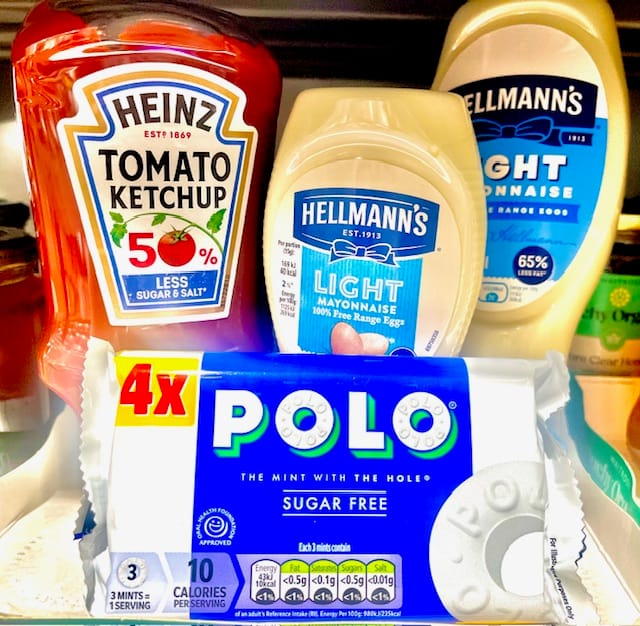
What Does "Light" Actually Mean?
Under European and UK food regulations, a product can legally be labelled "light" or "reduced" if it contains at least 30% fewer calories or fat than the standard / original version. On paper, that sounds meaningful. In practice, it rarely tells the full story. To compensate for the removal of fat or sugar — both of which contribute to flavour, texture, and satiety — food manufacturers replace them with a range of additives: artificial sweeteners such as aspartame, sucralose or acesulfame-K, modified starches, thickeners, flavourings, and often extra salt. The result is a product that is frequently more processed than the original, with an ingredient list twice as long and a nutritional profile that is far less straightforward than the packaging suggests.
A "light" yoghurt, for instance, may have fewer calories than its full-fat counterpart — but it will typically contain artificial sweeteners, less protein, and far less of the healthy fat acids that signal satiety to the brain. You finish it and, twenty minutes later, you are still hungry. Those products are therefore not helpful with weightloss, and in addition they have a reduced nutritional value.
The Psychological Trap: a Licence to Eat More
This is where the science becomes particularly fascinating — and sobering. Numerous studies have identified a phenomenon called calorie compensation. People who consume "light" or "diet" products tend to eat significantly more at subsequent meals, unconsciously convinced that their earlier restraint has earned them a reward. A zero-calorie soft drink becomes a mental permission slip for a biscuit. A fat-free yoghurt justifies a second helping of dinner.
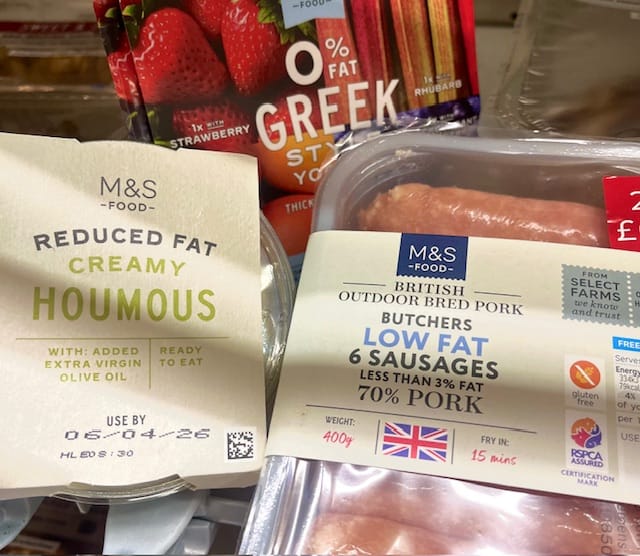
A landmark study from Cornell University has demonstrated that consumers eating snacks labelled "low fat" consumed on average 28% more calories than those eating the standard version snacks— even when the actual calorie difference between the two products was minimal. The word "light" on a label does not just describe the product; it changes our behaviour around food for the rest of the day. The brain interprets it as "a green light, not a speed limit".
A meta-analysis published in the International Journal of Obesity has confirmed this pattern across multiple studies: reduced-calorie product consumption does not reliably lead to reduced overall calorie intake. For many people, it achieves precisely the opposite.
The Sweetener Question: Zero Calories, Real Consequences?
Artificial sweeteners were heralded for decades as the perfect solution — all the sweetness, none of the calories. Their reputation has taken a serious hit in recent years. A major French cohort study involving over 100,000 participants (the NutriNet-Santé study) has found a significant association between regular consumption of artificial sweeteners and increased cardiovascular risk. Aspartame was specifically linked to higher rates of heart attacks and strokes.

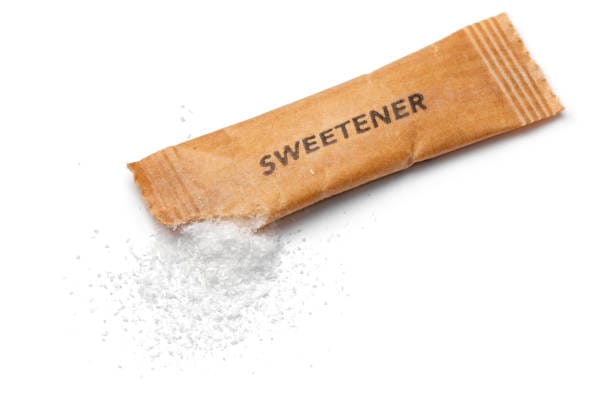

Beyond cardiovascular health, emerging research suggests that artificial sweeteners may disrupt the gut microbiome — the vast community of bacteria that plays a central role in digestion, immunity, and metabolic health. Some studies indicate that sweeteners alter insulin response even in the absence of real sugar, potentially encouraging the body to store fat more readily over time. In 2023, the World Health Organisation published guidelines advising against the use of sweeteners as a weight management tool, concluding that they provide no long-term benefit in reducing body fat and may carry health risks with sustained use.
The Satiety Problem: Why Full-Fat Often Works Better
One of the most counterintuitive findings in modern nutrition is that dietary fat does not make you fat — at least not in the way we once thought. Fat is essential because it fuels the body, insulates organs, and enables the absorption of fat-soluble vitamins A, D, E and K — without which bones, immunity and vision all suffer. It is the raw material for every hormone in the body, including sex hormones and cortisol, and forms the protective myelin sheath around nerve cells that allows the brain and nervous system to function. Without adequate fat intake, cell membranes break down, inflammation increases, and the body simply cannot sustain its most fundamental biological processes. Also, regarding weight management, fat is satiating. It slows digestion, triggers the release of satiety hormones, and keeps blood sugar levels more stable than refined carbohydrates or sweeteners. A full-fat yoghurt, eaten slowly and mindfully, will keep you fuller for longer than its "0%" equivalent, meaning you are far less likely to reach for something else an hour later.
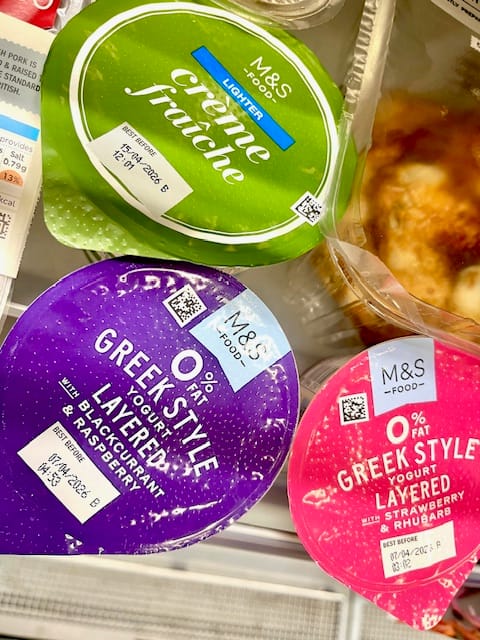
This is directly relevant to the light product debate. When fat is removed from a product, it is often replaced with sugar, starch, or sweeteners and the satiating effect disappears. You consume the product, your blood glucose spikes briefly, and then you crash — hungry again, and likely craving something sweet. Over time, this cycle maintains rather than reduces both calorie intake and dependence on sweet flavours. You can read more about how blood sugar stability affects your weight and energy levels in our article on diets and why they fail.
What Should You Do Instead?
The answer is not to swing to the opposite extreme and consume unlimited full-fat, high-sugar foods. It is to step out of the "light product" mindset altogether and return to the logic of real, minimally processed food. A plain full-fat yoghurt with fresh fruit will always outperform an artificially sweetened "diet" version — nutritionally, hormonally, and in terms of genuine satisfaction. Sparkling water with a slice of lemon is infinitely preferable to a "zero" soft drink. A small square of good dark chocolate will address a sugar craving far more effectively than an entire "light" chocolate bar.
Reading ingredient lists rather than front-of-pack claims is one of the most empowering habits you can develop.

If a product contains more than five or six ingredients, or if the first few are modified starches, sweeteners, or flavourings, it is worth putting it back on the shelf — regardless of what the label says about calories.
Light products do not make you lighter. In many cases, they maintain your dependence on sweet flavours, disrupt your satiety signals, and give you a false sense of dietary virtue. The real question is never "how many calories?" but "does what I am eating actually nourish me?" — and to that question, the word "light" has nothing meaningful to say.
If you would like personalised guidance on building a sustainable, balanced approach to nutrition without restriction or diet culture, book a consultation with Francine Joyce, registered nutritionist in London


